
Municipality of Delft
Fewer barriers between residents and the municipality
Research and design sprints to align the Municipality of Delft's public services with what residents actually need.
Public services from the resident's perspective
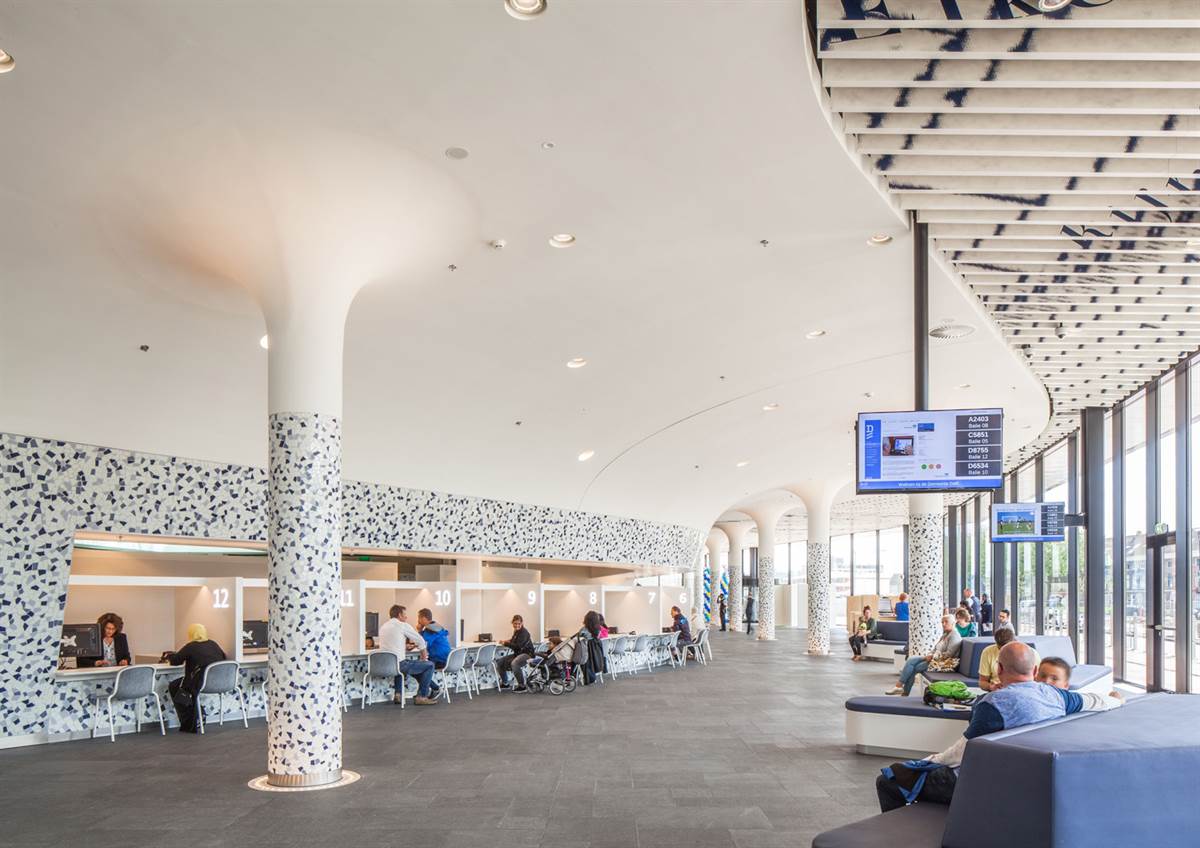
The Municipality of Delft wants every resident to be able to reach the municipality and arrange their affairs without getting stuck, even if they don't speak the language yet or don't know how the Dutch system works. Across several projects, Sping worked with the municipality to find out where residents run into trouble, online and at the city office. We turned the insights into customer journeys, personas and prototypes the municipality can use to improve its services.
Barriers at important moments in life
Challenge
Residents often need the municipality at important moments in their lives: a move, a new job in the Netherlands, money worries. That is exactly when uncertainty, language or shame can become a barrier. For newcomers it is even harder: they have to find a home, understand how the Netherlands works, and know when and why they need to arrange something with the municipality.
The municipality wanted to show through experiments that people get stuck less often when services are designed from their perspective. That took more than internal conversations: the municipality wanted to hear from residents themselves.
Listening to residents and staff
Approach
Design sprint: newcomers in Delft
In a design sprint at the city office, we first talked to staff from the front desk, the customer contact centre and the back office about how registration works today. We then interviewed international students and expats about their path to and within Delft. Together with the municipality we narrowed the biggest pain points down to three questions: how do I find a home, how does the Netherlands work, and how and why do I report a change of address? With municipal staff on the sprint team, we came up with and sketched solutions.
Customer journey of residents who speak other languages
In a follow-up project we looked beyond expats. We interviewed residents who speak other languages about their contact with the municipality: through the website, by phone, on social media and at the front desk. We also spoke to staff who help these residents every day. We translated their stories into personas and a visual customer journey, so the municipality can see where things go wrong and where the opportunities are.
Research at the city office
The municipality was exploring the future of the self-service kiosk in the hall, but had not yet spoken to the visitors themselves. So we went to the city office and talked to people who had just been there for a passport, driving licence or registration. Why did they come, how did they find their way, what did they need to bring, and would they have preferred to arrange it online? We worked the answers into personas, with attention to language skills, digital skills and channel preference.
Careful with privacy
In every project we handled participants' data with care. Interviews were voluntary and anonymous, contact details were deleted right afterwards, and in the personas we recorded things like language proficiency rather than background.
Insight anchored in the organisation
Result
The Municipality of Delft now has a clear picture of what residents and newcomers experience, backed by their own stories. Customer journeys, personas and prototypes give the municipality concrete tools to better align its website, front desk and reception. Because staff took part in the sprints themselves, that insight is also anchored within the organisation.
Expertise and methods
Expertise: UX research, service design and customer journeys. Methods: design sprints, interviews with residents and staff, on-site research, personas and prototypes. Way of working: co-creation with the municipality, with attention to privacy and accessibility.